

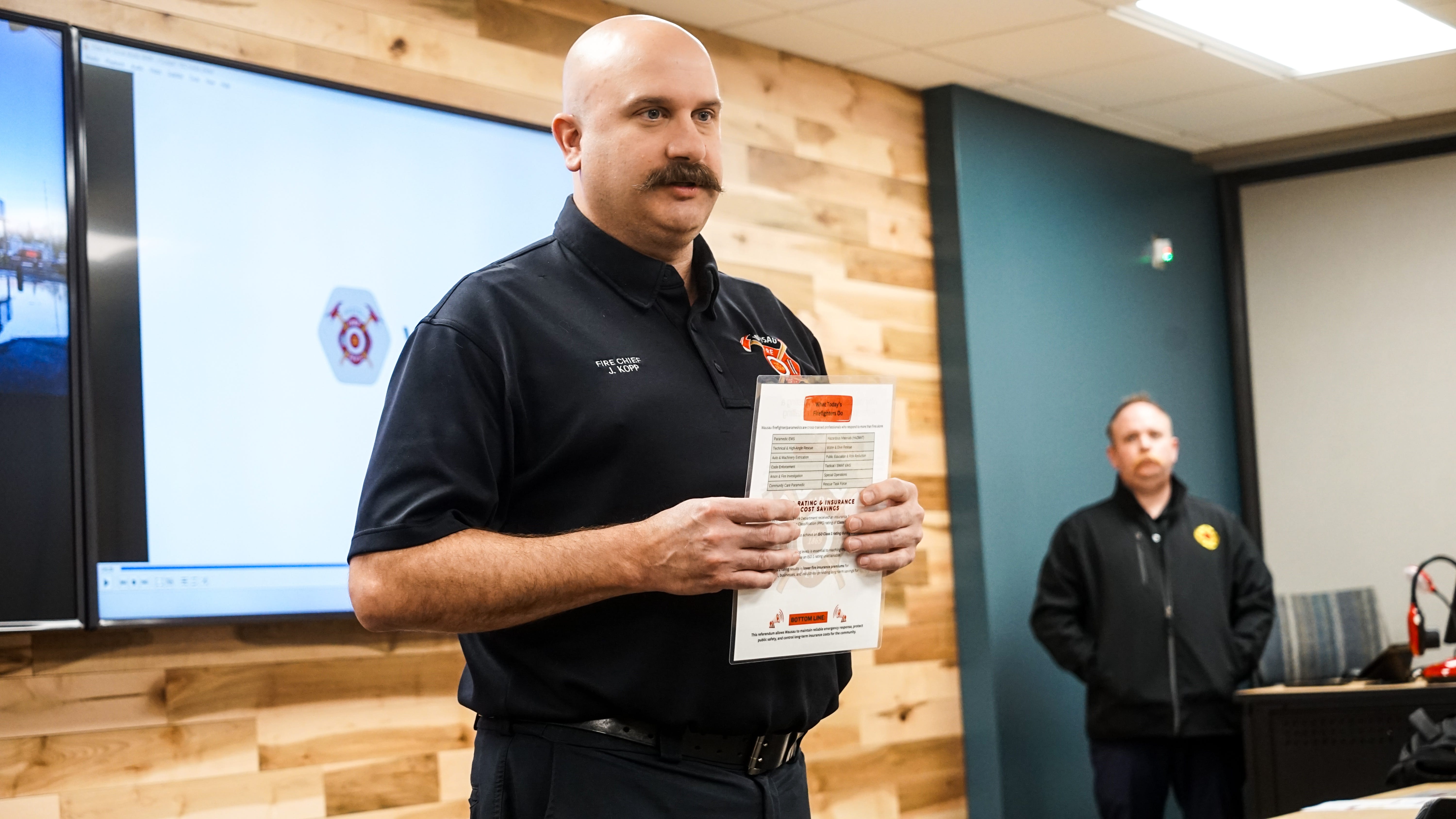
About halfway through the city’s second listening session about the upcoming referendum, I finally got to ask my question:
Why are we here?
Three years ago, during Mayor Katie Rosenberg’s administration, the city through the Fire Department applied for a SAFER grant that would help fund 12 additional city firefighters.
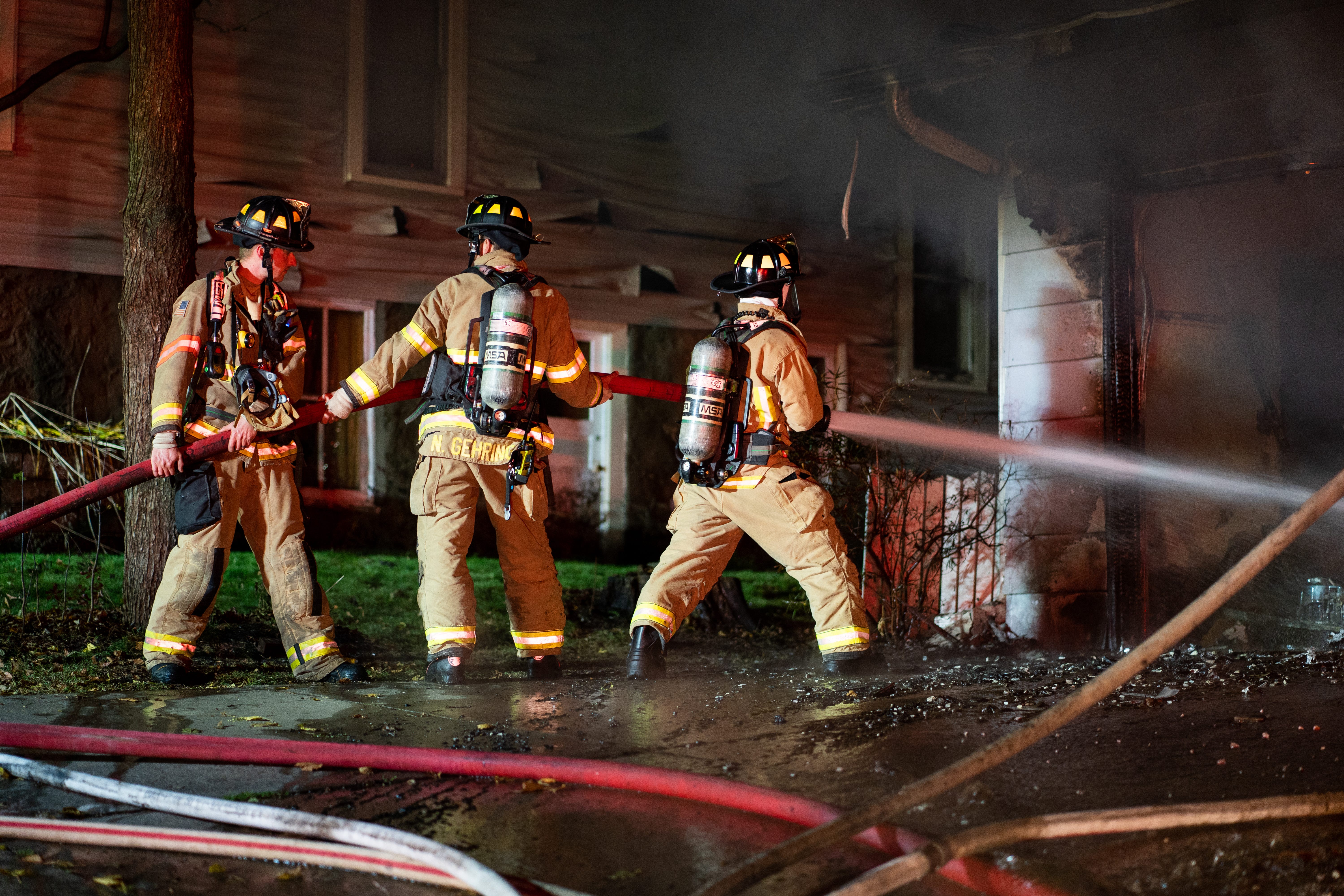
The need is something current Wausau Fire Chief Jeremy Kopp explained in some detail, but none of that was new to me. I wrote back in 2021 about the need for more firefighters in Wausau. Call volumes had more than doubled, and are now closer to tripling since the 1970s, but the number of firefighters really hadn’t increased at all.
Here are the numbers. Firefighters responded to 2,300 calls in 1970. Last year they responded to more than 7,200. That’s despite remaining at roughly 60 firefighters throughout that entire time, until recently when they hired 12 more firefighters.
It would be hard to find someone who argued with the personnel math.
But it was stated pretty clearly at the time that the grants were only temporary. At maximum, the grants would cover firefighters for three years.
As the saying goes, the check was in the mail. By 2027 — next year’s budget, which will start being prepared this summer — the grant funding will run out.
This garnered a lot of talk around last year’s budget process.
Ultimately the city settled on the idea of holding a referendum to increase the city’s levy limit by $1.45 million in order to pay for the firefighters.
This is where my question came in. Why are we here? City leaders always knew the bill would come due next year. Yet suddenly, it was a crisis.
So I asked Chief Kopp.
But it was the former fire chief — Bob Barteck — who answered me.
Why the city now needs to increase its levy limit
Barteck didn’t mince words. He’s retired, he told The Wausonian, and so more able to speak freely.
When the city applied for the grants to help fund the firefighter positions, it needed to justify on its application how it would pay for the positions once the grants ran out.
In other words, fiscal planning.
See our full election guide, updated with candidate interviews as we complete them, below:

Barteck said the closure of TIF Districts was on the horizon back when the positions were planned. When the districts closed, the new tax revenue coming into the city were supposed to help pay for the new positions. They should have covered the amount needed to pay for the new firefighters.
What happened? Barteck said a new council and new mayor came into office. The city did close a TIF district — District No. 6 — after a one-year extension. And the city council voted to close District No. 7 later this year, opting not to extend the district one year to use money from the district for affordable housing as it had with District. No. 6.
But that comes as annual expenses keep increasing.
This paragraph from the 2026 budget message tells a story:
Fiscal Challenge: For 2026 alone, we face nearly $4 million in new external cost pressures: renewal of the refuse and recycling contract, payroll and health-care increases, operating support for the homeless shelter, and rising debt service. State levy-limit growth and other revenue gains will cover only about half of that amount. Unless we act decisively, the gap will widen just as the $1.5 million liability comes due.
Last budget season saw department heads proposing cuts to their department in order to stave off deficits. As Mayor Doug Diny warned during the session, the bill would be coming due for those firefighter positions by 2027.
Diny told The Wausonian that using the TIF money was originally the plan. But:
However, with state levy limits capping annual increases (e.g., ~3.544% for 2027, base levy ~$36.7 million), rapid inflation across all city expenses, the City Council directed those windfalls toward other general fund expenses rather than fully offsetting the $1.45 million annual gap for the firefighter/paramedic positions.
In other words, increasing inflation and expenses (mentioned in the city’s budget message), along with reduced state money, ate up what would have gone toward paying for the firefighters.
The referendum is now the last option outside of somehow making $1.45 million in cuts to the city budget next year. And that would be on top of whatever other cuts city leaders might see themselves needing to make next year.
Terms of the referendum
What is the referendum actually asking of voters?
It’s to allow the city to exceed state levy limits (limits tied to the amount of net new construction on municipal tax levy increases were implemented during Gov. Scott Walker’s tenure) by $1.45 million.
That will allow the city the capacity to pay for the firefighters.
What does that mean for taxpayers? According to Kopp’s calculations, the person with an average home value (about $200,000) would pay an extra $6 per month, or $72 per year on their tax bill. Or, as Kopp put it, the cost of a Starbucks latte per month. (Of course I had to look, and the most expensive one costs about that much.)
There were about seven people at the Tuesday afternoon meeting. There are two more sessions planned closer to the vote, and one evening evening session held last Thursday.
No one at the meeting expressed doubt about the need for more firefighters. But there was plenty of concern over city spending, how this deficit was allowed to happen, and how the city could better plan in the future.
As one commenter pointed out, that’s how spending increases. It’s just this expense, it’s just that expense. Like anyone managing a household budget knows, small expenses add up.
Residents could send a message by voting no. But, as the former chief warned, it might send the wrong message — not that people are mad about spending, but that they don’t want additional firefighters. The safety of firefighters — along with residents — could be at risk, Barteck and other fire department leaders explained.
Voters will have to make that decision on the April 7 ballot.
Bonus:
The Wausonian works hard to make all election stories free out of a sense of civic duty.
Paid subscribers can hear the audio of my question about the referendum and former Chief Barteck’s candid response below the paywall. Consider supporting The Wausonian and its election coverage by subscribing today.
